


SUNCREAT - Sept. 28th 2024
All About Hammocks with Bars: The Complete Guide to Spreader Bar Hammocks
Hammocks have been a symbol of relaxation and comfort for centuries. Originally used by indigenous peoples in Central and South America, traditional hammocks provided a cocoon-like space ideal for resting. Over time, variations emerged—and one of the most popular innovations is the spreader bar hammock. Also known as a hammock with bars, this style adds structure and stability, offering a flatter, more open surface for lounging. In this complete guide, we'll explore the origins, evolution, benefits, and buying considerations for spreader bar hammocks—and help you decide if they're right for your outdoor relaxation space.
What Is a Spreader Bar Hammock?
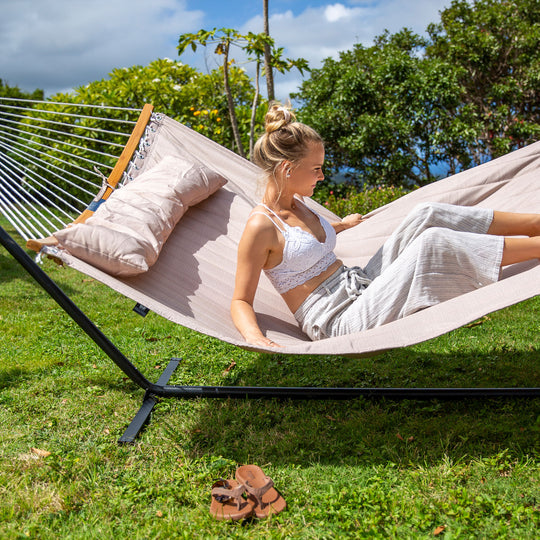
A spreader bar hammock features rigid bars—typically made of wood, bamboo, or metal—at each end that hold the fabric taut and open. This creates a flat, bed-like surface, unlike traditional hammocks that cradle the body in a deep curve. The result? A hammock that's perfect for reading, sunbathing, or socializing, with easy entry and exit.
The Origins: From Cocoon to Canvas
The history of hammocks spans thousands of years. Early designs used woven plant fibers, creating a snug, suspended cradle. While comfortable for sleeping, the deep curve wasn't ideal for activities requiring a flat surface.
In the 19th century, European and North American craftsmen innovated by adding wooden or bamboo spreader bars. This forced the fabric flat, making hammocks more practical for leisure activities. Soon, spreader bar hammocks became symbols of upper-class relaxation, gracing patios and gardens across the continent.
How Spreader Bar Hammocks Evolved
Materials Revolution
The mid-20th century brought synthetic materials like nylon and polyester, replacing natural fibers such as cotton and jute. These new fabrics were:
- More durable
- Resistant to water and mildew
- Better suited for outdoor use
Today's spreader bar hammocks also feature advanced bar materials:
- Traditional wood/bamboo – Classic aesthetic, natural warmth. Shop wooden bar hammocks
- Aluminum/composite bars – Lightweight, weather-resistant, ideal for frequent outdoor use. Explore aluminum frame hammocks
Design Diversity
Modern spreader bar hammocks come in endless styles:
- Classic stripes
- Modern geometric patterns
- Bohemian prints
- Solid neutrals for minimalist spaces
Some models now feature adjustable spreader bars, letting users customize the flatness or curve for personalized comfort.
Spreader Bar Hammocks Today: Why They're Everywhere
From private backyards to luxury beach resorts, spreader bar hammocks are staples of outdoor furniture collections worldwide. Their open design makes them ideal for:
- Sunbathing – Flat surface maximizes sun exposure
- Reading – Stable platform for holding books or tablets
- Socializing – Easy to sit upright and chat with friends
Pros and Cons: Is a Spreader Bar Hammock Right for You?
| ✅ Advantages | ❌ Limitations |
|---|---|
| Flat, stable surface for activities | Less stable in wind—higher tipping risk |
| Easier entry and exit | Taut fabric may feel less "cushiony" |
| Modern aesthetic appeal | Requires sturdy stand or sheltered location |
| Great for social lounging | Can be bulkier to store |
| Wide variety of styles | May need safety ropes in exposed areas |
The Curved Bar Innovation: Game-Changer for Comfort
One major advancement is the curved spreader bar. Unlike straight bars, arched bars:
- Allow the hammock to conform more closely to the body
- Distribute weight evenly, reducing pressure points
- Enhance stability, minimizing tipping risk
- Add sleek, modern visual appeal
➡️ Browse curved spreader bar hammocks
How to Choose the Perfect Spreader Bar Hammock
Consider these factors before buying:
1. Material Matters
- Fabric: Polyester for weather resistance; cotton for indoor softness
- Bars: Wood for aesthetics; aluminum for lightweight durability
2. Size and Weight Capacity
Standard sizes range from single to family-sized. Check weight limits—most support 400-500 lbs.
3. Indoor vs. Outdoor Use
- Outdoor: Choose UV-resistant polyester and rust-proof aluminum bars
- Indoor: Cotton fabrics and wooden bars create a cozy vibe
4. Stand or Hang?
- With a hammock stand – Portable, no installation needed
- Hanging – Requires sturdy trees or wall anchors (ensure proper hardware)
Care and Maintenance Tips
Extend your hammock's life with these simple steps:
- Store during extreme weather – Even durable materials last longer with protection
- Use a weatherproof cover when not in use
- Clean fabric per manufacturer instructions
- Inspect bars and hardware regularly for wear
- Avoid prolonged UV exposure – Use UV protectant sprays on fabric
The Future of Spreader Bar Hammockstenance Tips
As material science advances, expect:
- Even lighter, stronger fabrics
- Enhanced UV and mildew resistance
- Ergonomic innovations blending flat design with body-contouring comfort
- Sustainable materials and eco-friendly production
Ready to Experience the Perfect Blend of Style and Relaxation?
Whether you're lounging in your backyard, relaxing at a resort, or creating a cozy patio retreat, a spreader bar hammock offers a little slice of tranquility in our fast-paced world.


